Data Science Essentials with Python
Course Description
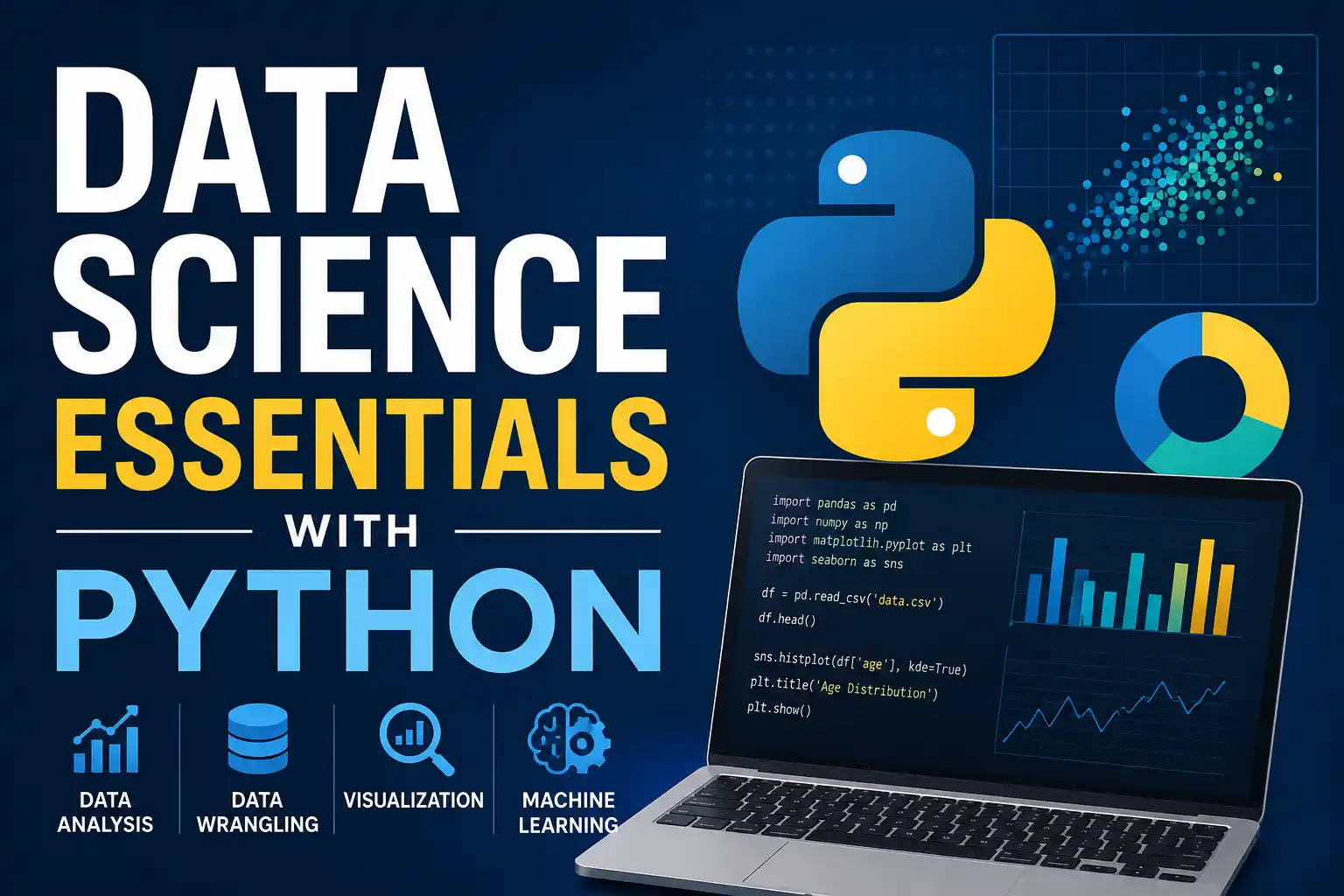
Data science is one of the most in-demand skills in the world. And Python is the language of choice for data scientists. This hands-on course from Cisco Networking Academy teaches you the essential data science skills using Python, from data wrangling to machine learning.
You'll learn to use industry-standard libraries: pandas for data manipulation, numpy for numerical computing, matplotlib and seaborn for visualization, and scikit-learn for basic machine learning. The course is built around real-world datasets and includes interactive coding labs where you write and run Python code directly in your browser. No local installation required.
This free, self-paced course takes about 20 hours to complete. It's ideal for aspiring data scientists, analysts, and anyone who wants to learn practical data science with Python. Basic Python knowledge is recommended, but the course includes a Python refresher. Upon completion, you'll earn an official Cisco digital badge.
Course Provider
Provider: Cisco Networking Academy, a global leader in IT and technology education.
Platform: Cisco NetAcad online platform – fully online, self-paced, with integrated Jupyter notebook labs.
Accreditation: This course provides practical data science skills that are highly valued by employers. The Cisco badge demonstrates proficiency in Python data science essentials.
Course Syllabus (Key Modules)
Learning Objectives
- Use pandas to load, clean, transform, and analyze real-world datasets.
- Perform numerical computations with numpy arrays.
- Create publication-quality visualizations with matplotlib and seaborn.
- Conduct exploratory data analysis (EDA) to uncover patterns and insights.
- Build basic machine learning models using scikit-learn.
- Apply data science skills to a complete end-to-end project.
- Earn a Cisco digital badge demonstrating Python data science proficiency.
Course Prerequisites
Technical: Basic programming knowledge is helpful. The course includes a Python refresher, but prior exposure to Python (variables, loops, functions) will make the course much easier. No prior data science experience required.
Recommended: Some familiarity with basic statistics (mean, median, standard deviation, correlation) is helpful but not required.
Who should take this: Aspiring data scientists, data analysts, business analysts, students, and professionals who want to learn practical data science skills using Python.
User Reviews
"I've tried learning pandas from YouTube and blog posts, but this course made everything click. The interactive labs are fantastic—you write code, see results, and get immediate feedback. The section on data visualization with seaborn was particularly good. I finished the course feeling confident enough to analyze my own datasets. Highly recommended."
"This is the best free data science course I've found. It's not just theory—you're actually coding from lesson one. The pandas and numpy coverage is thorough, and the EDA module taught me a systematic approach to exploring new datasets. The final project was challenging but rewarding. The Cisco badge is a nice credential. Well worth the time."
"Excellent course content, but be aware: it assumes you already know basic Python syntax. If you've never written a line of code, take a Python basics course first. The Python refresher module is helpful but moves quickly. That said, if you have basic Python down, this course is gold. The machine learning module is a great intro to scikit-learn."
Based on 950+ ratings on Cisco NetAcad.
💡 Final Thoughts
Data science is a superpower. And Python is the wand. This Cisco course gives you both. You'll learn the essential tools (pandas, numpy, matplotlib, seaborn, scikit-learn) by working on real datasets in interactive labs. No dry theory—you're writing code from day one. The course does assume you know basic Python, so if you're a complete programming beginner, start with a Python intro first. But if you have that foundation, this is one of the best free resources for learning practical data science. The Cisco badge is credible, but the real reward is the skill. You'll finish able to load, clean, analyze, visualize, and model data on your own. That's a career-changing capability.
Data Science Essentials with Python – FAQ
Is this course really free?
Yes, completely free. Cisco Networking Academy offers this course at no cost. You just need a free NetAcad account.
Do I need to know Python already?
Basic Python knowledge (variables, loops, functions) is strongly recommended. The course includes a Python refresher, but it moves quickly. Complete beginners should take a Python basics course first.
How long does the course take?
The course is self-paced and takes approximately 20 hours. Plan to spend several weeks if you study part-time.
Will I receive a certificate or badge?
Yes, upon passing the final exam and completing the project, you'll earn an official Cisco digital badge. You can share it on LinkedIn and other platforms.
Do I need to install Python or any libraries?
No. The course includes integrated Jupyter notebook labs in your browser. No local installation required.
Is this course enough to become a data scientist?
This course provides essential foundations. Professional data scientists also need advanced statistics, machine learning, and big data skills. But this is an excellent first step.